Book Reviews
Paradiso
By S.A Oliver
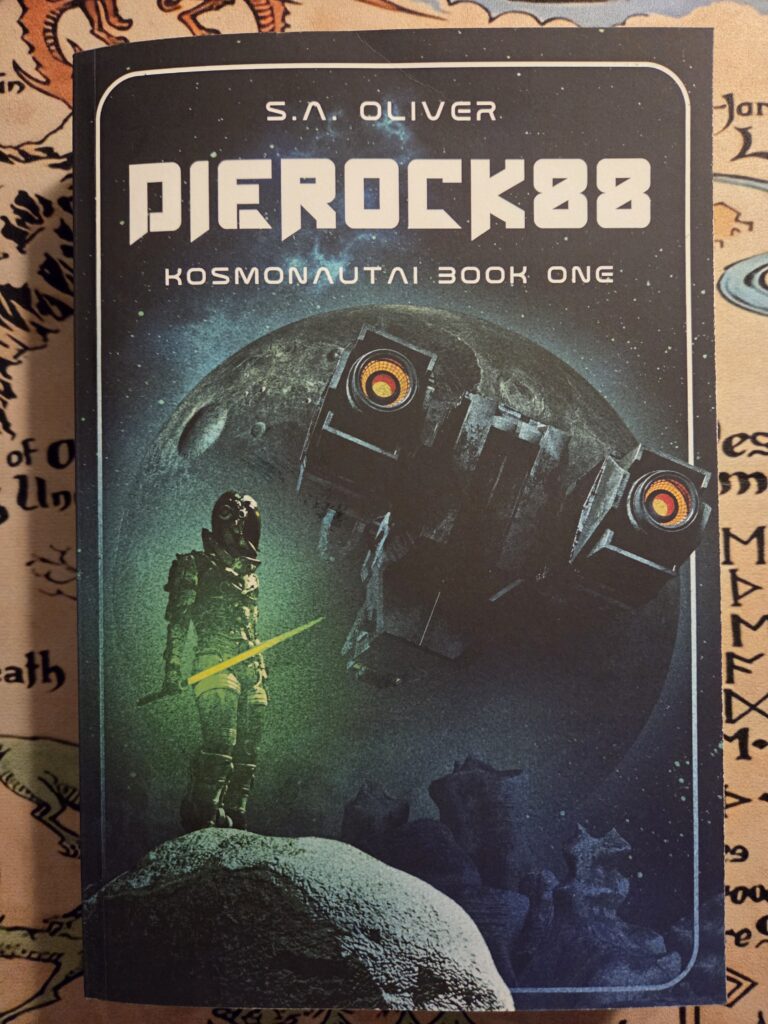
Paradiso by S.A. Oliver is the 2nd book in the Kosmonautai series. It follows the adventures of Atlas and the crew he found himself traveling with from the first book, Dierock 88. Paradiso is a more ambitious novel than the first in the series in that it expands the galaxy by quite a magnitude as well as adding many new plot lines and characters that affect the overall story.
The area that Paradiso shines brightest is its characters. They are very distinct from each other. While Atlas is the main character and the story focuses most on his arc, each side character had their own motivations and goals that weren’t reliant on Atlas’ plot. It’s fascinating to think back to the first novel and see the maturation of players in the story because the writing itself also continues along this line. There are darker parts in this book that show crew members growing up and realizing what the wider galaxy can actually be like.
This progression reminded more than a few times of the transition from Star Wars: A New Hope to Empire Strikes Back. We leave off in the first novel having seen our heroes succeed in their goal, celebrating as they fly off into the sunset. The second novel picks up right where the first leaves off and proceeds to go down a much more serious path and we see some of the characters at their lowest. This is a difficult type of plot to write because it’s a balancing act of bringing the characters through somber story developments while also providing hope that there can be a somewhat happy resolution. Paradiso definitely feels like a dark night of the soul type of character growth, especially for the lead.
Paradiso makes a large departure in style from the first book in scale. This is an incredibly bold step to go from a smaller, more contained setting to a galaxy full of political intrigue and deception. There are a lot of names, places, and relationships that get thrown at the reader in the first half that I would have kept up with more easily if I had written down a glossary while reading. By the second half, the galaxy smooths out and the flows easily since the reader is familiar with the characters at that point. I’m not generally a fan of political plotlines, but the way they are all woven together in this book is fantastic. It may be one of my favorite examples of this type of writing. Oliver also does a great job of making the reader question each character’s motives. Just as Atlas is wary about the intentions of pretty much everyone in his life, so is the reader. I felt like this is very fitting and helps the reader relate with Atlas. Both the character and reader grow in understanding of the way things really work. Each change in character perspective gives us a little more insight into what is actually happening throughout the galaxy and shifts the reader’s trust.
I do think this book could have smoothed out some rough edges with one more round of editing. There are spelling and grammatical errors, but they’re fairly minor. The biggest improvements would have come from how certain scenes are constructed. The overarching plot of the offending scenes work well. However, the wording, and sometimes formatting, makes them confusing. As an example, there is a chapter that begins with by only referring to the character involved with a pronoun. The paragraph describing the scene is fantastically detailed, but without knowing who the person is, the reader is left guessing at the most important part of the setup. The character’s name is then mentioned in the proceeding paragraph, but it was a distraction until then. There are also a few areas where the scene and characters change in between paragraphs. It made me go back and re-read the section because the jarring shift didn’t flow correctly. This could be solved by using an asterisk divider or something similar. These issues didn’t affect the plot, but they made the sections a more difficult read than necessary.
The other criticism I have of the book is that some scenes happen too quickly and without enough setup. Action heavy sci-fi plots need peaks and valleys to the intensity. The rise to the major set pieces should be gradual to give the reader time to arrange everything in their mind as well as have a firm grasp of the stakes of upcoming scenes. Slightly more explanation is needed in these segments, especially in such a foreign feeling galaxy. Downtimes, or valleys, in the plot are usually the best times to set up these pieces. I noticed a rush happening in Paradiso most often in and before action scenes. These are, in my opinion, one of the most difficult types of scene to write. The author seems to become impatient to get to the action and begins writing at the pace of the events in real time, forgetting details that help flesh out the spectacle. Having thought about this, I do believe the best fix for this issue would have been to split this into two books and extend some of the scenes and areas of plot. Splitting it up would have also allowed time to show distances between planets. In cutting out the travel sections, it seems like the characters are able to go from one planet to another nearly instantly. This shrinks the setting in the reader’s mind. This is a criticism with a silver lining since I’m really saying that I would have loved to read twice as long of a story.
Paradiso was a pleasure to read because of the writing style. Oliver shows the ability to write extremely descriptive atmosphere in a way that made me pause and re-read a line multiple times just to admire how great of a sentence I had read. This style of writing, if not done well, can seem overly flowery and pretentious. However, Paradiso marvelously blends this elegant prose with the more down to Earth (odd phrasing for a book that takes place light years from Earth) dialogue that the characters exhibit. One character in particular that stood out to me as an example of highly polished writing is Titanus. He is meant to be a charismatic leader whose impassioned speeches draw people to his cause. The author has a firm grasp on this type of delivery. It was more than believable that many people would flock to this personality. It would be interesting to know which historical speeches were used as inspiration for these sections. This manner of writing keeps the reader engaged and entertained throughout the entire book.
Paradiso is a bold push into a much wider galaxy than the first book in the Kosmonauti series. The first half of the novel sets up a lot of the players and important locales. This may seem like a lot of information to sort out, but by midway through the book, the stage is truly set and the plot flows to exhilarating heights. Though there are a few areas that could have used more polish, the overall writing style is outstanding and the characters are written is a way that the reader can easily relate. I would recommend this to a wide variety of different readers. There is high adventure, sci-fi, and more than a little fantasy element included. I had been looking forward to Paradiso as a follow up to Dierock 88 for a while and now I begin the wait for the third book. Which will be a day one purchase for me.
-Patrick Jones